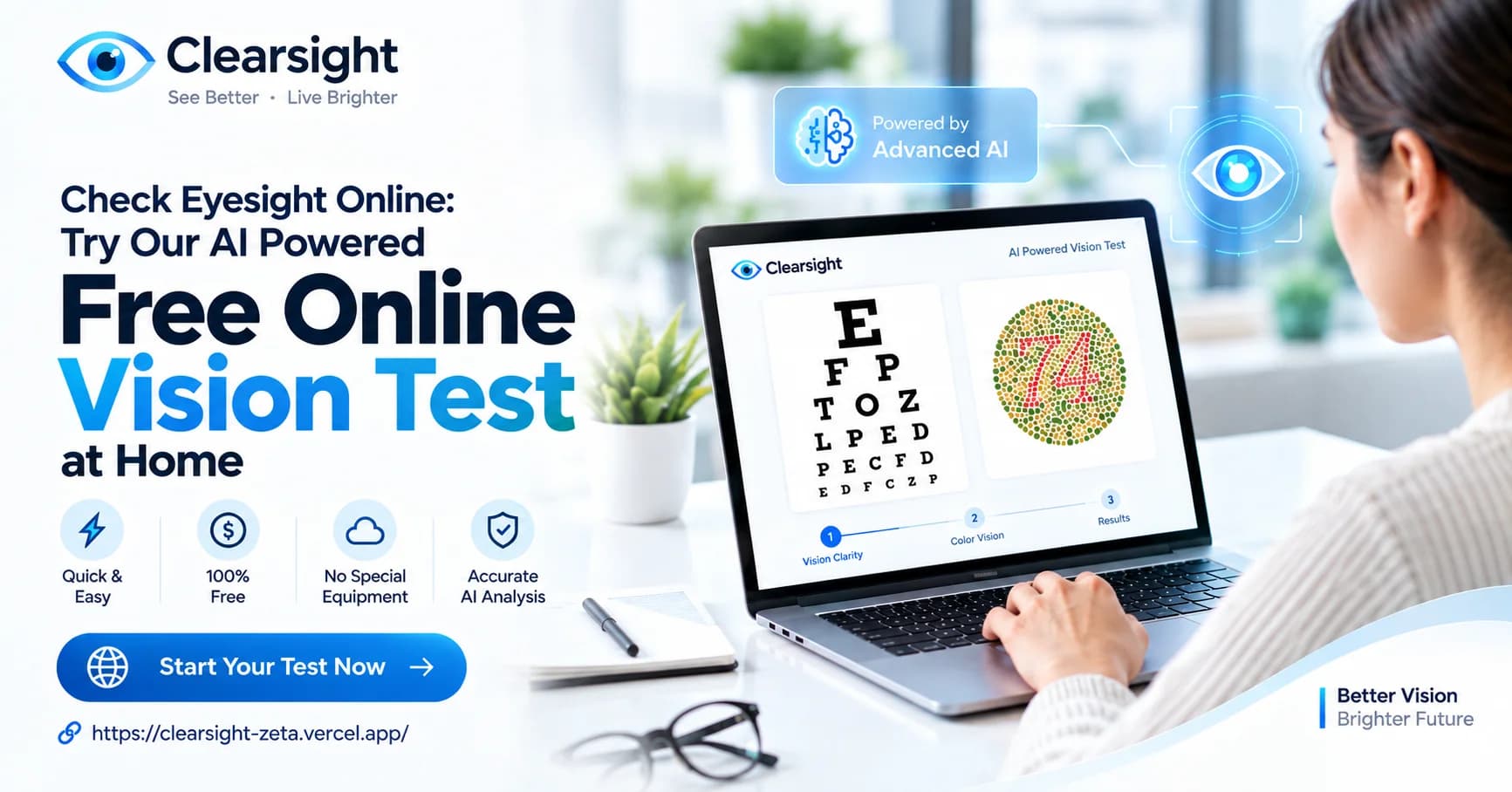
Remote vision screening is a useful test case for browser-based computer vision: it must produce dependable measurements on uncontrolled consumer hardware, handle health-adjacent data responsibly, and plug into existing telehealth and retail workflows. This article walks through the architecture of an AI-assisted vision testing platform we built, and the engineering decisions that apply to any health-tech, wellness, or optical business planning a similar product.
The Engineering Problem: Screening Without Specialized Hardware
A clinic measures visual acuity with calibrated charts at a fixed distance under controlled lighting. A browser-based test has none of that. Screen size, pixel density, brightness, and viewing distance all vary by user, and each one changes the size of the symbol the eye actually sees. The platform therefore has to solve a measurement problem before it can present a single test: converting what is drawn on the screen into a known visual angle.
System Architecture
- Client application: A responsive web app renders the tests, guides the user step by step, and runs entirely in the browser, with no installation required.
- Calibration module: Establishes screen scale and viewing distance so test symbols render at the correct angular size.
- Test engine: Presents optotypes and color patterns, records responses, and adapts difficulty based on accuracy.
- Scoring service: Converts responses into a standardized acuity estimate with a confidence indicator.
- Results and integration API: Stores results securely and exposes them to partner systems such as telehealth portals and practice management software.
Our advanced web development team builds this kind of client application in Next.js and TypeScript, with performance budgets that keep it usable on older devices.
Screen Calibration and Viewing Distance
Calibration can combine a reference object scaling step with guided distance instructions based on display size. Where camera access is granted, computer vision can estimate face distance from facial landmarks and prompt the user to move closer or farther. Processing on the device keeps images from ever leaving the browser, which simplifies privacy review.
Adaptive Test Logic
Snellen-style acuity testing uses staircase logic: symbol size shrinks after correct responses and grows after errors until the result converges. Color-vision screening uses patterned plates designed to reveal common deficiencies. Both modules log response times and error patterns, which improves scoring and flags unreliable sessions, such as rapid random answers.
Validation and Accuracy Controls
- Benchmarking: Compare platform output against clinical chart results across a range of devices and lighting conditions.
- Device variance handling: Detect unsupported or unusual displays, and show a warning instead of a misleading result.
- Confidence and referral thresholds: Report ranges rather than false precision, and recommend professional examination for borderline or poor results.
- Session quality checks: Reject or repeat tests where responses suggest distraction or incorrect setup.
Compliance, Privacy, and Data Governance
Health-adjacent products need compliance decisions at the start of the design, not after launch. Whether a tool is a wellness screening or a regulated medical device depends on its intended use and claims, so involve regulatory counsel early. Where results link to identifiable patients, apply HIPAA-aligned safeguards: encryption in transit and at rest, role-based access, audit logging, and business associate agreements with hosting and analytics providers. Obtain explicit consent for any camera use, follow US state privacy laws, and meet WCAG accessibility standards, which matter especially for a vision product.
Business Applications for Vision-Testing Technology
- Telehealth platforms: Pre-visit screening that gives clinicians baseline data before an appointment.
- Optical retail and eyewear brands: Qualifying customers and routing them to exams, reducing no-shows and improving booking quality.
- Employer wellness programs: Screening for screen-related eye strain across distributed workforces.
- Insurers and benefit providers: Low-cost triage that encourages timely professional care.
Longitudinal results also become a data asset. Aggregated, de-identified trends feed analytics dashboards that show screening volumes, referral rates, and outcomes by cohort.
Engineer Your Own Computer Vision Platform
The same building blocks of calibration, on-device inference, adaptive logic, and secure integration apply to many health-tech and industrial use cases. Black Zero Technologies delivers custom computer vision and AI software for US organizations, with full code ownership and US time-zone overlap.
Get a Custom Software Estimate or Book a Scoping Call to scope your platform.