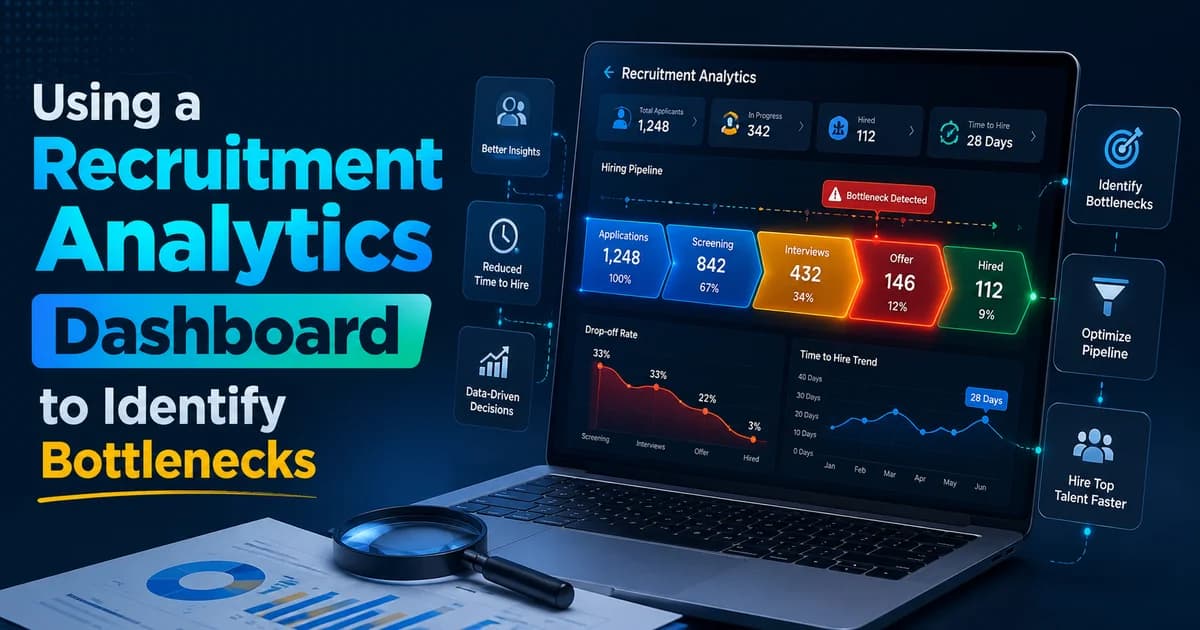
Using a Recruitment Analytics Dashboard to Identify Bottlenecks
Every day your company corporate roles go unfilled, your business suffers significant financial losses. Trying to eliminate hidden delays in the recruitment process based solely on estimates can cost thousands of rupees in lost productivity, yet many HR teams still try to improve their workflow without clear information.
To gain complete control over their recruitment process, modern HR teams use a centralized recruitment analytics dashboard. This cutting-edge software provides complete transparency and transforms the complex recruitment process into a visual pipeline, where speed and operational efficiency are constantly monitored.
Stop wondering why the best candidates drop out before the final interview stage, and instead start understanding where the real bottlenecks in your recruitment process lie.
The Hidden Cost of Manual Tracking
When you rely on fragmented spreadsheets to track candidates, you create major operational blind spots in your hiring process. Disparate files and scattered email threads make it nearly impossible for recruiters to know whether the best candidates are stalling at the initial screening stage or are stuck waiting for internal interview feedback.
The reality of today market is that talented candidates make decisions very quickly. If your team spends days planning and scheduling the next step, these top candidates could easily end up signing with a faster-paced company.
Adopting a data-driven hiring model eliminates these barriers. By accurately measuring the candidate drop-off rate across different disciplines, you can replace guesswork and speculation with clear, actionable information. This way, you can make your talent pipeline safe and effective before candidate interest wanes.
How to Identify Bottlenecks in Recruitment Pipeline Stages
It is important to take a close look at your workflow to identify structural friction in the hiring process. When you use advanced metrics to identify bottlenecks at different stages of the recruitment pipeline, you can clearly see where the hiring process is slowing down or stalling.
An automated system keeps track of every critical step, from the initial resume being received and processed to the candidate accepting the final offer. This transparency significantly reduces your overall Time to Hire because it immediately reveals delays in various areas.
For example, if your recruitment metrics show that the dropout rate is unusually high right after the initial screening, managers can intervene immediately. They can change the assessment methodology or speed up the contact process, which can avoid losing more talented and suitable candidates.
Traditional Tracking vs Modern Data Analytics
Legacy tracking methods can be a major obstacle to effectively scaling your recruiting efforts. Adopting a modern applicant tracking system completely changes the way internal recruitment and resource teams work, as it replaces static notes and manual records with dynamic, real-time data reporting.
The shift from manual logs to automated platforms significantly improves operational transparency and efficiency. This enables clear monitoring of every stage of the recruitment process; decisions can be made faster and more accurately, and teams have complete insight into where the recruitment process is headed.
| Metric Focus | Manual Spreadsheet Method | Automated ATS Analytics |
|---|---|---|
| Pipeline Visibility | Hidden and difficult to track | Real-time recruitment analytics dashboard |
| Stage Delays | Guesswork and manual review | Instant alerts on bottlenecks |
| Candidate Drop Off | Unclear reason for loss | Detailed drop-off stage data |
| Hiring Velocity | Slow and reactive | Proactive and optimized |
Strategies to Optimize the Hiring Process in the USA
Collecting data (Analytics) is only half the battle; the real benefit comes when effective and timely actions are taken based on this information. Modern and forward-thinking Talent Acquisition teams use their metrics to re-evaluate long and inefficient interview stages, improve unclear job descriptions, or completely upgrade old and slow resume parsing software.
Organizations that work to continuously optimise hiring process USA gain an immediate and significant advantage in the highly competitive corporate market. By adopting this modern data-driven strategy, you can ensure that your business hires the best and most talented people in the industry, while traditional and slow-moving competitors are still busy sifting through applications that are weeks old and unread. This not only makes the recruitment process faster and more effective but also significantly increases the chances of acquiring the best talent on time.
Conclusion
Identifying hidden delays and bottlenecks in your recruitment process is the first and most important step towards building a high-performing team. When you use a comprehensive recruitment analytics dashboard, you effectively eliminate guesswork from your talent acquisition strategy and base every decision on accurate data.
Do not lose valuable and talented candidates due to a slow and inefficient system. Start measuring your recruitment performance with absolute accuracy today, identify the weaknesses in your process, and create a recruitment system that helps you attract and retain the best talent faster. You can also review our strategies on managing operational bottlenecks to further refine your internal workflows.
Master Your Hiring Pipeline Today
Are you ready to take your recruitment metrics to the next level? Contact Black Zero today and implement our advanced, AI-powered system into your organisation. Visualise your entire recruitment process with complete transparency, quickly identify key bottlenecks, and start making better, faster, and more effective hiring decisions. Take action now to attract the best talent and strengthen your hiring strategy.