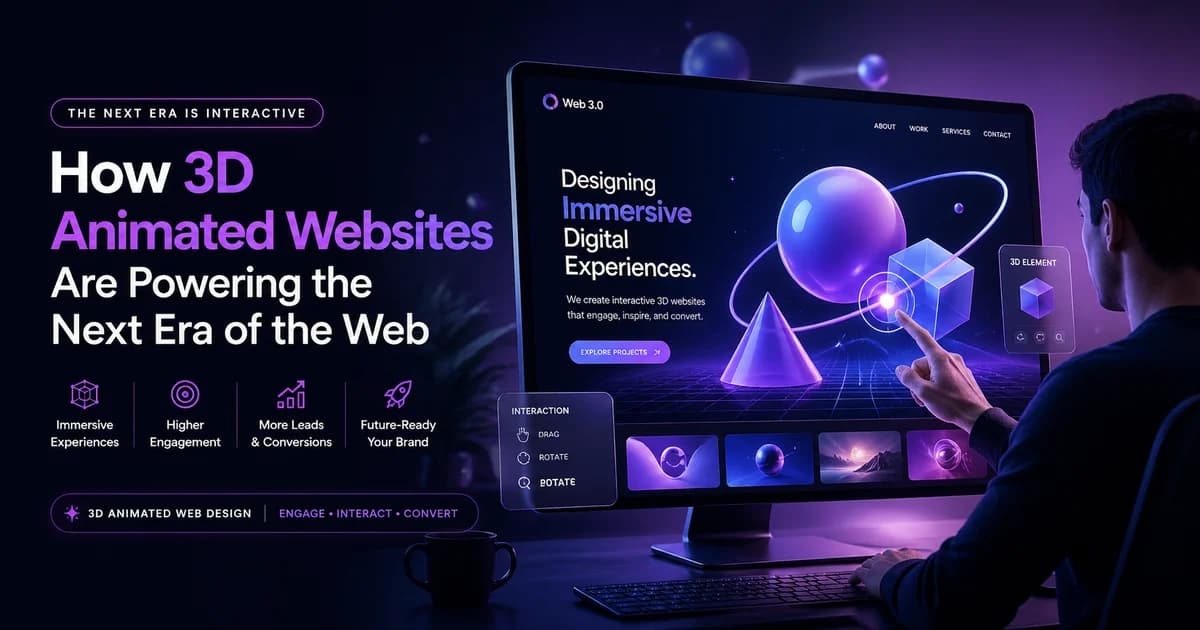
Flat, static web pages are quickly becoming a thing of the past in the competitive digital marketplace of the USA and Saudi Arabia. Today, consumers expect more than just plain text and images. They want an immersive digital experience that draws them in as soon as the page loads. That is where 3D animated web design comes in, transforming ordinary browsing into an interactive journey.
Big brands are already embracing this innovative approach to differentiate themselves from the competition. By moving beyond traditional flat layouts, companies can deliver an engaging environment that instantly grabs attention and builds lasting brand loyalty.
The Shift to Next-Generation Web Experiences
The digital world is changing rapidly, and the Web 3.0 aesthetics are completely defining what visitors now expect from a brand. Modern consumers are no longer satisfied with just scrolling through pages and reading blocks of text. Instead, they want to explore, interact, and feel connected to the digital space. This demand is driving a massive shift towards next-generation web experiences.
By combining bold, cinematic visuals with smooth spatial animations, developers can create a luxurious and premium feel that is essential for enterprise businesses to succeed. When each scroll triggers a fluid animation or reveals a hidden element, the website becomes a living entity. This level of sophistication elevates the overall brand image and establishes a strong, modern identity in a crowded marketplace.
Technical Architecture: Next.js, GSAP, and Framer Motion
For US enterprise brands, building next-generation web experiences requires a highly robust frontend architecture. High end interactive 3D websites are now developed using a modern tech stack primarily driven by Next.js and React. These frameworks provide the foundation for lightning fast server-side rendering, ensuring that heavy 3D assets do not compromise performance or SEO rankings.
To achieve seamless visual transitions, developers utilize Framer Motion alongside Tailwind CSS. This combination allows for precise component styling and fluid UI layouts that respond instantly to user interactions. Framer Motion makes it incredibly simple to orchestrate complex spatial movements across the screen without adding unnecessary code bloat to the digital platform.
Furthermore, mastering scroll animations is the key to Web 3.0 aesthetics. By integrating GSAP and ScrollTrigger plugins, engineers can pin specific website sections, execute complex clip-path transitions, and trigger SplitText logic exactly when the user reaches a specific viewport height. This highly controlled cinematic scrolling guarantees that high conversion landing pages run flawlessly across all devices.
Why Interactive 3D Websites Drive Engagement
The biggest challenge for any digital platform is how to keep visitors on a web page for longer. When a website feels boring or lifeless, bounce rates increase rapidly. However, when users encounter interactive 3D websites, their behaviour changes significantly.
Interacting with a dynamic element naturally forces visitors to stay longer, which significantly increases user retention. Visitors are invited to drag, rotate, or zoom in on elements, transforming the act of simply viewing into an active experience.
A common fear is that these complex visual features will degrade the loading speed of a website. Fortunately, modern development tools like Spline 3D web design completely solve this problem. These platforms ensure that even heavy graphics load extremely quickly and the overall performance of the website is not affected. Let us see how these dynamic platforms differ from older models.
| Feature | Traditional Static Websites | Interactive 3D Websites |
|---|---|---|
| User Engagement | Low to Medium | Extremely High |
| Time on Page | 1 to 2 minutes | 3 to 5 minutes plus |
| Brand Perception | Standard | Premium and Futuristic |
| Visual Appeal | Flat and 2D | Deep and Immersive |
Building High Conversion 3D Landing Pages
Beyond aesthetics, these modern layouts also have a huge business value and a clear return on investment associated with them. 3D elements are not just for looking pretty; they serve a highly strategic purpose. They naturally draw the attention of the visitor exactly where you want it, whether it is a main buy button or a lead generation contact form.
When you create high-conversion 3D landing pages, you guide the journey of the visitor smoothly to the end goal through purposeful motion. Each animation acts as a subtle visual cue that moves the eye further down the sales funnel.
Strategically using spatial depth and movement reduces barriers, builds trust, and ultimately converts casual browsers into paying clients.
Conclusion
The digital world is moving at an incredible pace. Adopting 3D animated web design is no longer just a cool trend, but has become a serious necessity for USA and Saudi Arabian brands that want to stand out in their industry. Upgrading your digital presence ensures that you remain relevant, engaging, and highly competitive.
Ready to Upgrade Your Digital Presence?
Do not let your brand be held back by a simple and lifeless website. Partner with Black Zero to create a cinematic, interactive platform that truly engages your audience. Contact us today to get started on your next web project and turn your vision into reality.
Frequently Asked Questions
Does 3D animated web design slow down page load speed?
No. By utilizing modern frameworks like Next.js and lazy loading techniques, 3D assets load asynchronously without affecting the initial page performance.
Why do US tech companies prefer interactive 3D websites?
They significantly boost user retention and engagement, naturally guiding enterprise clients through a premium sales funnel to increase conversions.
Which tools are best for custom scroll animations?
Enterprise developers heavily rely on GSAP and ScrollTrigger plugins to execute complex cinematic scroll effects and clip path transitions smoothly.
How do animations improve lead generation?
Strategic animations act as visual cues, directing the focus of the user directly toward contact forms and main call to action buttons.